
 +91 9207070711
How Occupational Therapy Can Support School Readiness in Children
How Occupational Therapy Can Support School Readiness in Children
Category: Onnaam Program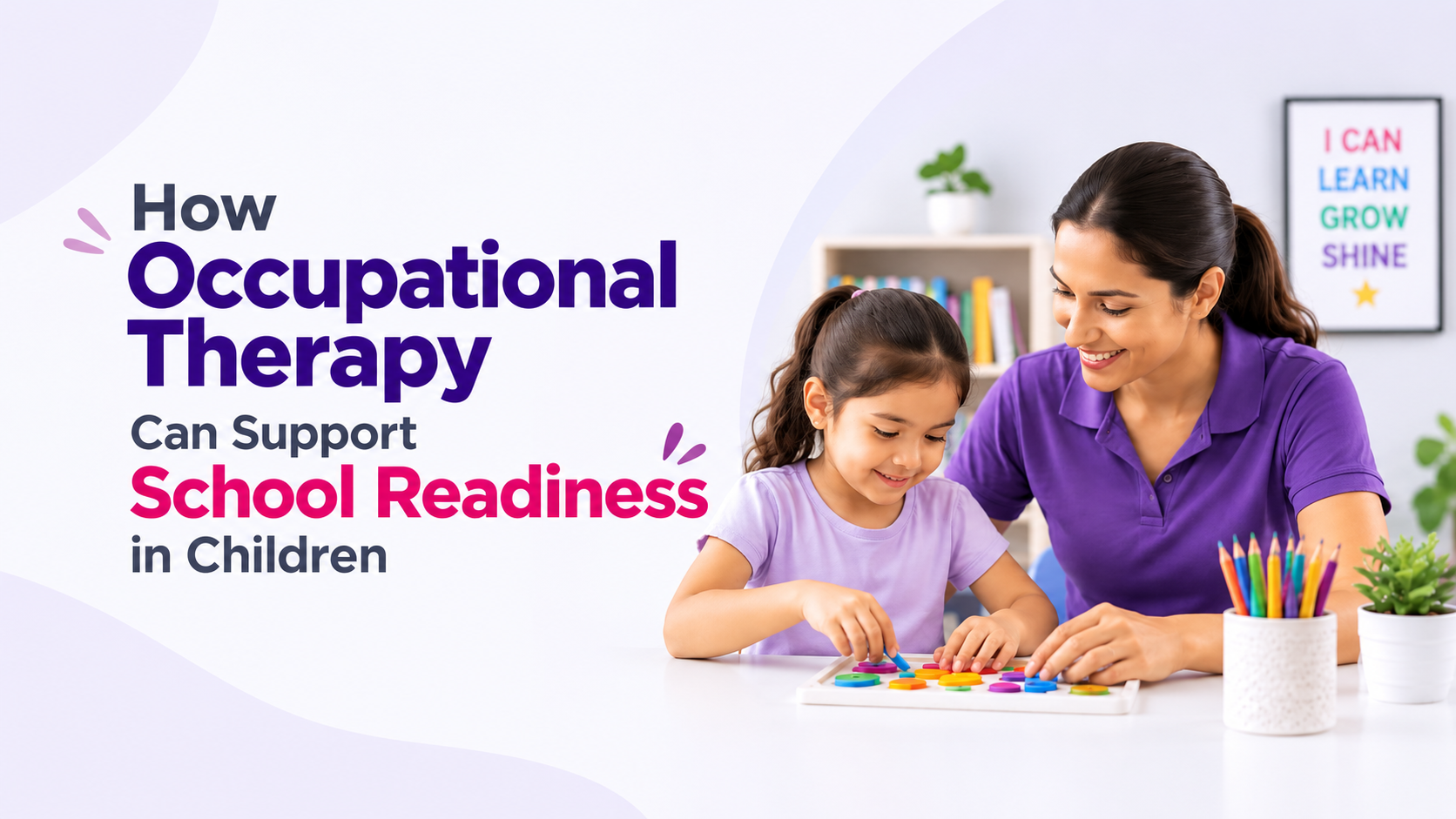
Starting school is one of those biggest transitions in a young child's life, and having a well-structured school readiness program in Kochi can make all the difference in how smoothly a child adapts to classroom life.
For many parents in the city, the run-up to school admission brings a familiar worry, like is my child really ready to sit still, hold a pencil, follow instructions, and manage a full day away from home? Occupational therapy tackles exactly those foundational skills, usually before a child even sets foot in a classroom.
What Is the True Meaning of "School Readiness"?
School readiness is not only about knowing the alphabet or counting up to twenty. It feels like this whole mix of things that click in, maybe all at once, or just little by little, it depends on the kid.
- Like for instance fine motor skills, keeping a pencil steady, snipping with scissors, buttoning a shirt without it snagging halfway through.
- Then gross motor skills, like staying upright at a desk, walking up and down stairs, and later running and jumping, but safely of course.
- There is also sensory regulation too, managing classroom noise, coping with different textures, and handling those tight crowded places without getting overwhelmed.
- And self-help skills, such as dealing with the lunchbox, using the toilet on their own, and getting shoes on independently, without it turning into this big, long ordeal every time.
- Plus, attention and executive function, like following multi step directions, switching between activities without a whole situation, and waiting for a turn even when it isn't “their time” yet.
When even one of these areas lags behind, children might struggle a bit even if they’re cognitively bright and really keen to learn, which is why a dedicated school readiness program in Kochi is more like a whole child perspective not only academics. It looks at the full person, including growth in ways that aren’t always obvious at first.
How Occupational Therapists Build These Skills
1. Fine Motor and pre-writing skills
An occupational therapist focuses on things like hand strength, grip patterns, and hand eye coordination, through more or less targeted play. Playdough, little tweezers, threading beads, and those early pre-writing strokes, long before anyone even starts formal handwriting practice.
2. Sensory processing support
A lot of kids who are getting started at school for the first time are sensitive to noise, crowded hallways, or the feel of a school uniform. OT helps them build tolerance with planned sensory activities, so when the classroom gets busy it feels manageable, not overly overwhelming, even when it can seem like too much at first.
3. Self-Regulation and Attention
Sitting through a 30–45-minute lesson takes a self-regulation that doesn’t just show up on its own for every kid. Therapists often use movement breaks, proprioceptive input and soothing strategies to help children keep their attention steady and calmer, even when it feels hard.
4. Independence in Daily Routines
From opening a tiffin box, to washing hands after the bathroom break, OT supports that everyday independence which helps a child work confidently without needing an adult hovering around all the time.
5. Social & play skills
In therapy sessions children are taught turn-taking along with sharing and that sort of cooperative play, so basically, they get the social toolset they need for recess and group activities. It’s like practicing in smaller moments before the bigger thing.
Signs your child might get a lot out of a school readiness program
- They avoid, or really push back against coloring, sketching, or puzzle stuff
- They have trouble gripping a spoon, a crayon, or scissors the right way
- Loud sounds bother them a lot, plus certain fabrics or tight crowded places
- They can’t really stay in one place, or they get upset when it’s time to switch between activities
- Their speech seems behind, and there are also motor or sensory worries
- They get very frustrated with self-care tasks like dressing or eating on their own
If a few of these feel familiar, an early assessment can help quite a bit and make a meaningful difference before the school term begins.
Why Does Early Intervention Matter?
Children who get occupational therapy support before they start school usually seem to adjust more smoothly to classroom demands, feel less stuck, and build confidence faster than kids who only get help after problems show up. Kochi parents are noticing this more and more—early, proactive therapy inside a structured school readiness program really works better than trying to patch gaps once a child is already lagging behind other peers.
And this is pretty much the hole that ONNAAM, Lorem Wellness Care's early childhood development program, is set to close. ONNAAM blends occupational therapy, developmental screening, and parent guidance so children are prepared in a fuller way for school life. It targets motor, sensory, and self-regulation milestones all together, rather than handling them separately, like “one at a time” in isolation.
How Kochi's School Readiness Program at Lorem Wellness Care Works?
At Lorem Wellness Care, we’ve got a multidisciplinary team that looks at each child one by one, so we can spot which parts of motor skills, sensory processing, or attention are lagging behind. Then we put together a therapy plan that fits them. And it’s guided by what’s actually happening for your child.
In practice, our approach includes:
1. OT sessions that are individualized, and tuned to classroom-relevant abilities
2. Sensory integration therapy for kids who are either over responsive, or under-responsive to various sensations
3. Parent coaching so what gets practiced in therapy, can carry through into everyday routines at home
4. Coordination with speech and developmental therapists whenever there are overlapping concerns
If you want to understand more, explore the ONNAAM program and see how our school readiness program in Kochi can help your child walk into school with confidence, even if they were unsure before.
Frequently Asked Questions
1. At what age is it appropriate to enroll in a Kochi school readiness program?
While early intervention is always more successful than later, most children benefit from an assessment between the ages of three and five, ideally six to twelve months prior to school enrollment.
2. How much time does it take to notice progress?
Within eight to twelve weeks of regular therapy, many families see improvements in their child's fine motor and self-help skills, though this varies from kid to child.
3. Does my child's enrollment in a school preparation program require a diagnosis?
No. A formal diagnosis is not necessary for early support; many children who attend occupational therapy simply have developmental delays or gaps.
4. How does speech therapy differ from occupational therapy in terms of preparing students for school?
While speech therapy deals with language and communication, occupational therapy concentrates on motor, sensory, and self-help abilities. Both are beneficial to many kids, particularly when delays coincide.
5. Can problems with focus and attention be addressed by a school readiness program?
Indeed. OT supports self-regulation and attention, which are essential for sitting and concentrating in a classroom, employing sensory and movement-based techniques.