
 +91 9207070711
Speech Therapy After Stroke: What Recovery Looks Like in the First Months
Speech Therapy After Stroke: What Recovery Looks Like in the First Months
Category: Speech Therapy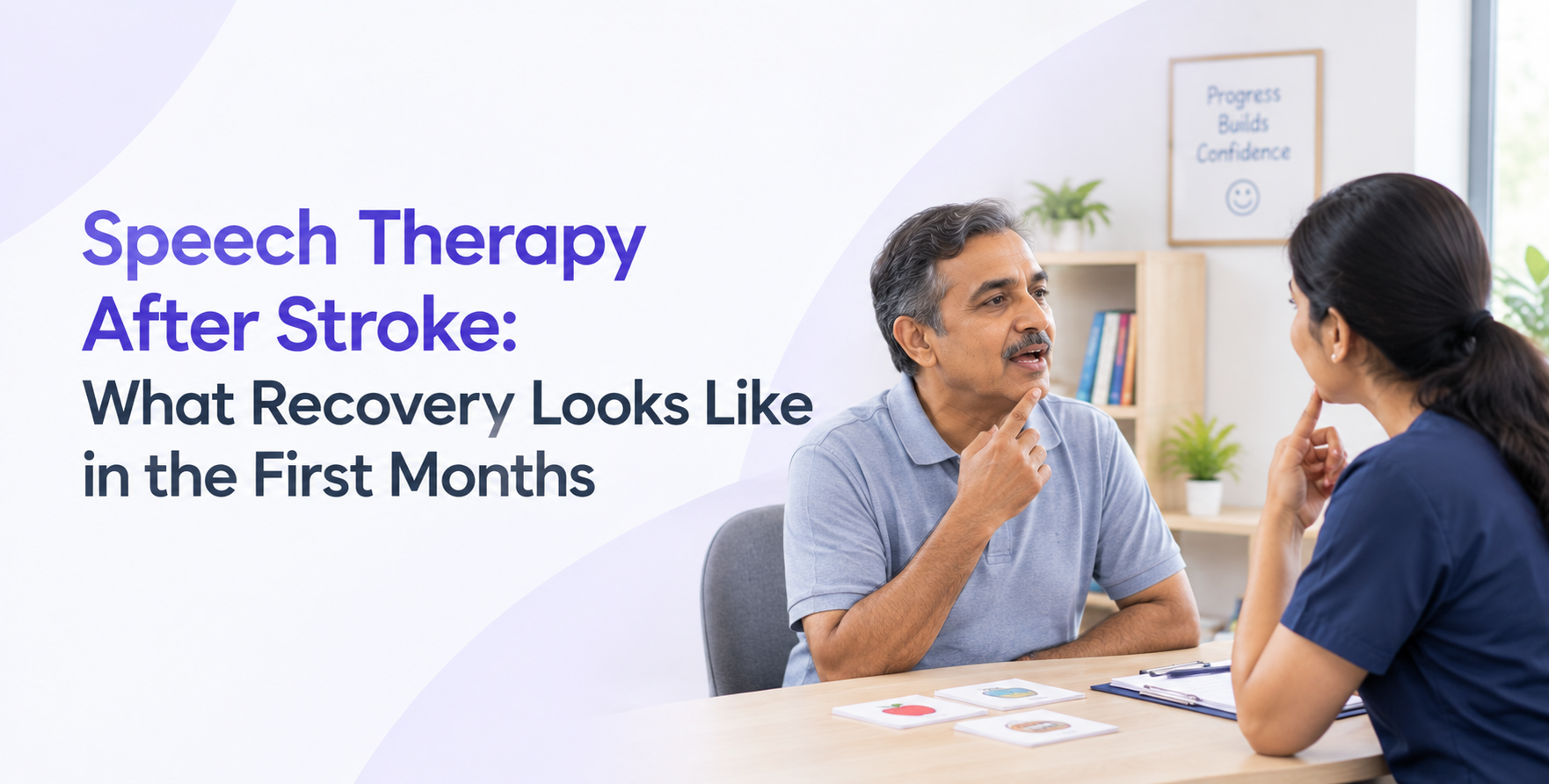
A stroke can affect speech and how a person understands others. It can also make reading harder, slow down thoughts during talks, and affect swallowing.
Often, family members spot it early. A father may struggle to find the right words. A mother may sound slurred. A husband may understand what is said, but he cannot respond. If you are looking for speech therapy after stroke in Kochi, this guide explains what recovery usually looks like in the first months, which problems speech therapy treats, and how to know when to start.
Each stroke and each recovery can look different. This is only general information. It does not take the place of guidance from your doctor or neurologist.
Why a Stroke Affects Speech and Communication
Speech and language depend on certain brain areas. In many people, these areas sit mostly on the left side. When someone has a stroke, the blood supply to part of the brain is cut off. Then the abilities that area supports may weaken. In some cases, the abilities are lost. The muscles that help with speaking and swallowing can also be hit.
This is why communication trouble shows up often after a stroke. It also differs a lot from one person to another. One person may have trouble pulling out the right words. Another person may know the message well, but the words may come out hard to understand or not clear.
Common Communication Problems After a Stroke
A speech-language pathologist, often called a speech therapist, checks which of these issues are present before therapy starts.
- Aphasia means trouble with speech, understanding, reading, or writing. Thinking ability is not usually affected. Still, a person may have a hard time finding the right word or keeping up with what others say.
- Dysarthria is slurred or slow speech. It can also sound weak. This happens because the speaking muscles are weak.
- Apraxia of speech is different. The muscles can be strong, but the person may struggle to plan and set up the movements needed to talk.
- Cognitive communication difficulties can show up as problems with focus, memory, or organizing thoughts. Because of this, talking can feel draining. It may also become confusing.
- Voice changes can include a weak voice, hoarse sound, or a breathy tone.
- Dysphagia involves swallowing trouble. People might cough or choke while they eat or drink. Food may also feel stuck. This should be checked quickly since it affects safety and nutrition.
When Should Speech Therapy Start?
Speech therapy often starts once a patient is medically stable and the doctor gives the go-ahead. In a hospital setting, the first step may be a basic check of how the person communicates and how they swallow. Doing this soon can help because the brain tends to relearn tasks more easily in the first weeks and months after a stroke. Quick swallowing checks can also lower the risk of choking.
You do not have to wait for a return to usual routines. A full evaluation can be done at any time, even long after the stroke, such as months or even years later.
What Recovery Looks Like in the First Months
Recovery is not a straight line, and it can’t be promised on a fixed timetable. Still, many families find it helpful to know the general pattern.
The first days to weeks. The focus is on medical stability. A speech therapist may check swallowing safety and find simple ways for the person to communicate, such as yes/no responses, gestures, or picture boards. Some improvement can happen on its own during this period as the brain settles.
Weeks one to three months. This is often when the most noticeable progress happens. Therapy usually begins in earnest with an assessment of speech, language, cognition and swallowing. Sessions target the specific problem, such as naming objects for aphasia, strengthening and slowing speech for dysarthria, or safer swallowing techniques for dysphagia. Regular practice at home makes a big difference at this stage.
Three to six months. Progress often continues, though it can feel slower. Therapy tends to move from basic skills to real-life communication, such as holding conversations, using the phone, handling questions and returning to daily routines.
Beyond six months. Many people keep improving for months and even years with continued therapy and practice. Progress may be gradual, and goals shift towards confidence, independence and quality of life.
Recovery speed depends on the size and location of the stroke, the person’s age and general health, how soon therapy begins, and how consistently they practice.
What Happens in Speech Therapy After Stroke
A solid stroke speech recovery plan often starts with a full check.
- First is assessment. This means looking at speech and language, how well you understand, read, and write. It also covers thinking skills, voice quality, and swallowing.
- Next come personal goals. These goals might be simple day-to-day needs like choosing food, chatting with family, or getting back to work.
- Then there is focused therapy. The activities and drills should match the diagnosis. That could be aphasia, dysarthria, apraxia, problems with cognitive communication, or dysphagia.
- You also get home practice. It is usually short and done each day. This helps keep gains moving between visits.
- Family and caregiver training matters too. Loved ones learn ways to support communication. The aim is to reduce strain and avoid frustration.
- Finally, therapy works best as a team. Speech work should link with physiotherapy for movement and with occupational therapy for daily living tasks.
How Families Can Help at Home
- Use short, clear sentences. Pause so they can respond. Do not rush to finish their thoughts.
- Lower background noise. Turn off the TV or music during talks.
- Use help when words get hard. Try gestures, pictures, or writing. A phone can also work.
- Include them in family chats. Include them in choices too.
- Talk to them as an adult who can handle things. Avoid talking down.
- Follow the therapist’s swallowing plan. Use the right food textures. Keep the correct body position.
- Do small practice sessions each day. Keep it short. Avoid long sessions that wear them out.
Speech Therapy After Stroke at Lorem Wellness Care, Kochi
Looking for speech therapy in Kochi after a stroke? At Lorem Wellness Care, our speech language pathologists work with adults who need help with communication and related skills. We do speech assessments and therapy for aphasia, dysarthria, apraxia of speech, and other stroke-related communication issues. We also support cognitive communication, voice problems, and swallowing needs.
We create a plan based on a clinical assessment and what the therapist's schedule allows. We also involve family members so care can continue at home.
Stroke recovery often needs more than one type of care. That is why our speech therapy, physiotherapy, and occupational therapy teams work together at our center in Panampilly Nagar, Kochi.
Frequently Asked Questions
Q1: What is post-stroke speech therapy?
A: Following a stroke, speech therapy is provided by a speech-language pathologist to enhance speaking, comprehension, reading, writing, thinking, voice, and swallowing abilities. It is customized to address the issues brought on by the stroke.
Q2: After a stroke, when should speech therapy begin?
A: It normally begins within days to weeks after the patient is medically stable and the doctor gives his or her approval. Although therapy might be helpful months or years later, early screening aids in the prompt identification of swallowing and communication issues.
Q3: How long does it take to restore speech after a stroke?
A: A set timetable does not exist. Although recovery might last for months or years, many patients see the biggest changes in the first three to six months. The severity of the stroke, the patient's health, and their level of practice consistency all affect the timing.
Q4: What communication issues are typical following a stroke?
A: Aphasia (word and comprehension difficulties), dysarthria (slurred or weak speech), apraxia of speech (difficulty coordinating speech movements), cognitive communication issues, voice changes, and swallowing issues are the most prevalent.
Q5: Can someone who has had a stroke entirely regain their ability to speak?
A: While some people continue to struggle, others regain most or all of their communicative abilities. Results differ from person to person. The likelihood of significant progress is increased by early, regular therapy and family support.
Q6: After a stroke, does speech therapy help with swallowing issues?
A: Indeed. In order to lower the risk of choking and chest infections, speech-language pathologists evaluate swallowing (dysphagia) and provide safer swallowing techniques, food and liquid changes, and exercises.
Q7: Does Kochi offer post-stroke speech therapy?
A: Yes, in addition to physical therapy and occupational therapy, Lorem Wellness Care in Panampilly Nagar, Kochi, provides adult speech therapy for stroke-related communication and swallowing issues.