
 +91 9207070711
Stroke Rehabilitation Center in Kochi: Therapy, Exercises and Recovery Guide for Adults
Stroke Rehabilitation Center in Kochi: Therapy, Exercises and Recovery Guide for Adults
Category: Physiotherapy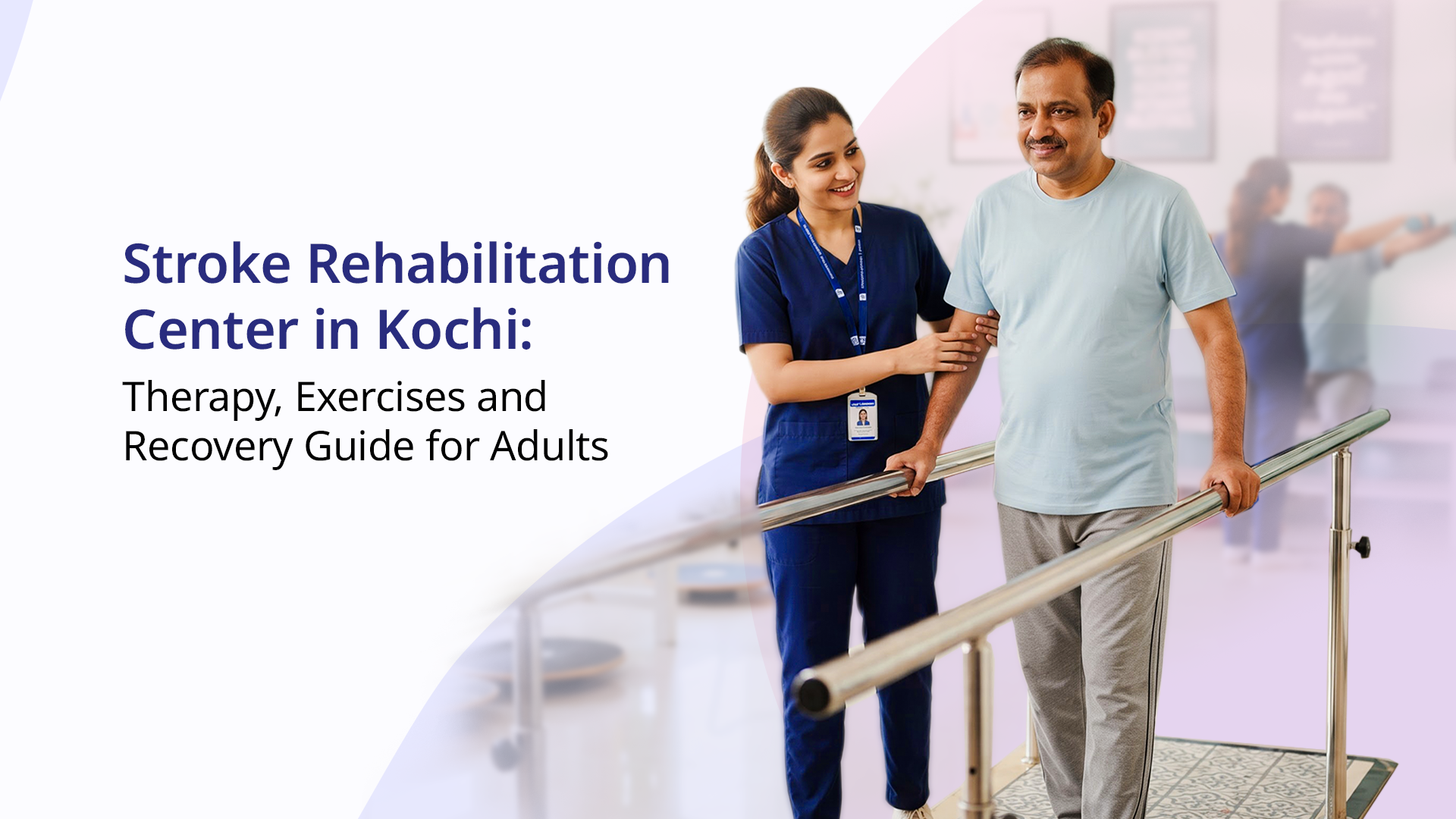
A stroke can flip a life fast. In one moment, a person is up, speaking, and going to work. A short time later, the same person might have weakness on one side.
Words may come out slurred. Even small things, like doing buttons or stepping up to a stair, can feel hard or wrong. After a hospital stay, many families in Kerala ask one clear question. Where can they go next for real recovery?
Finding the right rehab clinic for stroke rehabilitation center in Kochi matters a lot once the crisis has passed. The next step is not only about therapy. It is also about support, goals, and the right plan. This write-up walks through what stroke rehab includes. It also points to common therapy activities that are used during recovery. It explains what to check when choosing a recovery center, so you can start early and feel steadier.
What Is Stroke Rehabilitation?
Stroke rehab is a set plan for therapy. It aims to help the brain and body regain skills that were taken away. After a stroke, injury can be limited to one brain region. Still, the brain can form fresh connections between nerve cells. People often call this neuroplasticity. Progress usually comes from practice done many times, not just once. With guidance from a coach, repeated work can help the brain make the needed changes.
Rehab that helps after a stroke often focuses on a few key areas:
- First, it targets muscle strength and movement control. It also works on coordination.
- Next, it trains balance. It includes practice for walking.
- Another big part is the arms and hands. This can mean better grip and smoother use.
- Therapists also address posture. They teach safe ways to move, like going from bed to chair.
- Rehab aims for independence too. That means doing daily tasks with more control.
- In some cases, it also covers speech. It may include help with swallowing and communication.
Every stroke is different. So, the plan should be tailored to the person’s age, which brain area was affected, and what they want to achieve.
When Should Rehabilitation Start After a Stroke?
In many cases, the care team starts activity as soon as it feels safe, sometimes within the first couple of days after someone is admitted. Getting up, changing position, and doing light exercises can lower the risk of tight joints, bed sores, and loss of muscle strength.
When the person is well enough, they may be moved to a rehab unit that is set up for recovery after stroke. There, therapy is more focused and done more often. Improvements are usually quickest during the first three to six months, so it helps to begin without delay. Progress may still happen after that time, so waiting is not a must for results.
How Physiotherapy Helps Stroke Recovery
Physiotherapy is a key part of many stroke recovery plans. A physiotherapist checks how you move, how tight your muscles feel, how steady you are, and how you walk. After that, they create a plan to bring function back in smaller stages.
After a stroke, physiotherapy may help with these areas:
- Getting strength and motion back in the weaker arm and leg
- Easing stiffness and muscle tightness, including spasticity
- Improving balance and helping lower the chance of falls
- Working on walking again, with or without a walking aid
- Building stamina and easing tiredness
- Reducing shoulder and joint pain that can happen due to weakness or poor positioning
Our physiotherapy services in Kochi focus on pain control, injury recovery, and stroke rehabilitation center in Kochi. Our therapists shape plans for each person to support a safer and faster return to daily activities.
Stroke Therapy Exercises Commonly Used in Rehabilitation
The exercises that help after a stroke depend on what happened and how the person is doing. Some programmes use these tasks under close supervision:
- Passive and assisted range-of-motion exercises help reduce stiffness and keep joints moving, mainly at the start.
- Getting up from a chair and shifting weight helps your legs get stronger and builds trust when you stand and transfer.
- Balance work, with support first and then harder over time steadies you and lowers the chance of falling.
- Walking practice, such as in parallel bars, with a walker, or on a treadmill teaches a safer walk with a evener step.
- Practice for arms and hands in real tasks, like reaching and picking things up, brings back daily skills such as eating and getting dressed.
- Constraint-based movement training pushes you to use the weaker arm by restricting the stronger arm during sessions.
- Mirror-guided therapy gives you a visual cue to help wake up movement in the affected limb.
- Core and trunk strength work, like bridging, supports better posture, steadier sitting, and smoother walking.
Recover with Confidence at Lorem Wellness Care
If you or someone in your family has had a stroke and needs rehab support in Kochi, you can reach out to Lorem Wellness Care. Our therapists offer a one-to-one stroke rehabilitation center in Kochi for pain relief, injury recovery, and rehabilitation. The aim is to help you regain your movement and day-to-day function in a way that feels safe. Getting help early can change the outcome; book a visit today to begin your rehab plan.
Frequently Asked Questions
1. What is a center for stroke rehabilitation?
It is a center where persons who have had a stroke can recover everyday skills, speech, and mobility with the assistance of qualified therapists. Under a customized strategy, an excellent center integrates occupational therapy, speech therapy, and physical therapy.
2. When should stroke rehabilitation begin?
As soon as the physician certifies that it is safe, which is frequently a few days after the stroke. Early rehabilitation promotes a quicker recovery and helps avoid complications.
3. What is the duration of stroke rehabilitation?
It varies. In the first three to six months, many people make the most progress, and some people keep improving for up to a year. Goals will be established and often reviewed by your therapist.
4. Which exercises work best for stroke therapy?
There isn't just one ideal workout. Range-of-motion exercises, sit-to-stand practice, balance and gait training, and task-specific arm practice are frequently utilized. For your situation, a physiotherapist should select and oversee them.
5. Is physical therapy beneficial following a stroke?
Indeed, a key component of stroke healing is physiotherapy. It helps control stiffness and pain and enhances strength, balance, walking, and independence.