
 +91 9207070711
Why Early Special Education Makes A Difference for Children with Down Syndrome?
Why Early Special Education Makes A Difference for Children with Down Syndrome?
Category: Special Education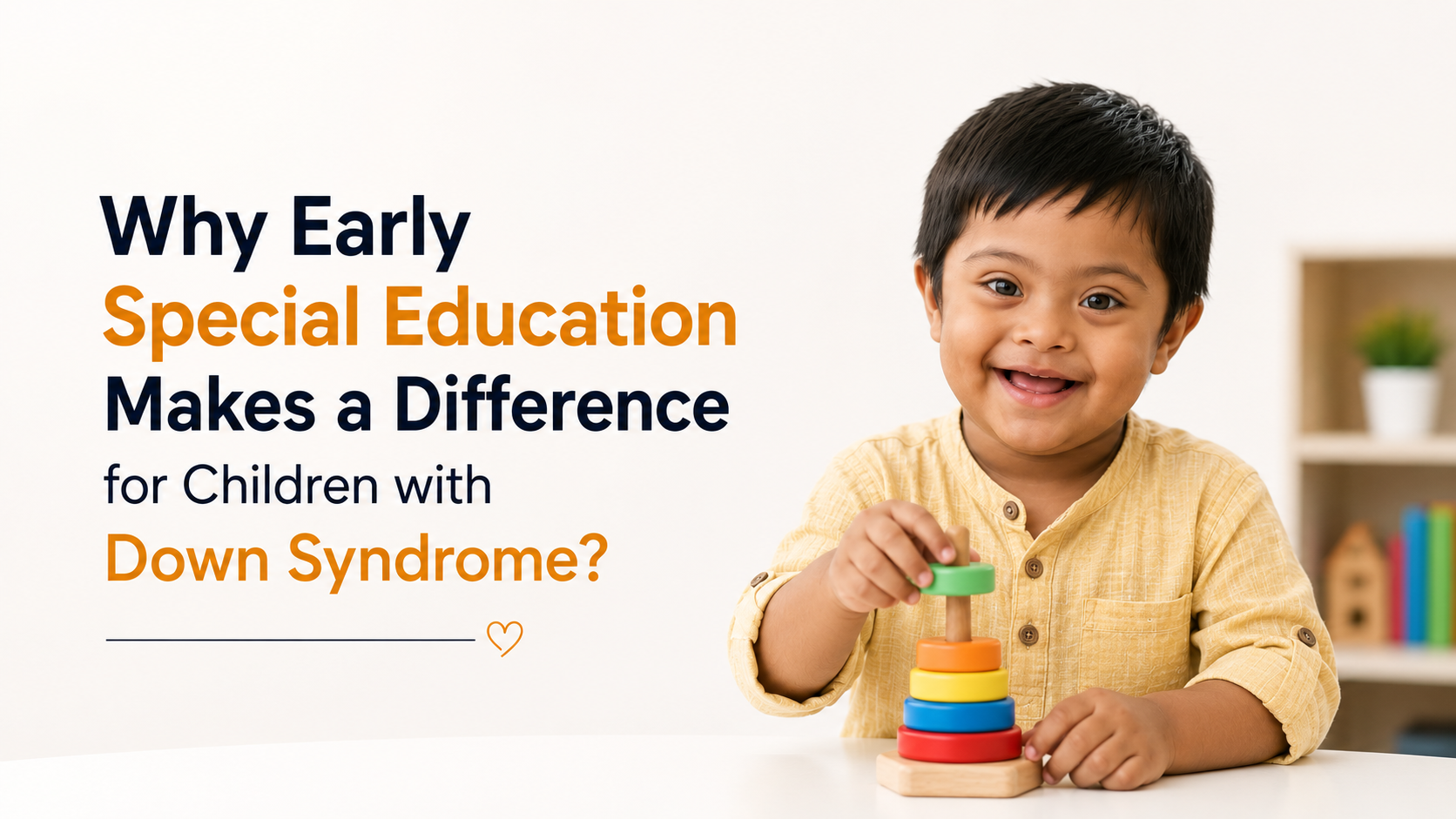
If your child has recently been diagnosed with down syndrome, you might hear the same phrase again and again from doctors, therapists, and even other parents: “start early”.
And honestly it can feel like yet another worry added to an already overwhelming season, because finding the best Down syndrome center in Kochi can start to feel like the most urgent, only decision you’re supposed to get right. Still if you understand why early intervention and special education matter, plus what it really looks like day to day, that pressure can slowly turn into a clearer plan. One that feels hopeful not just on paper but in real life.
At Lorem Wellness Care, we support families across Kochi who are trying to get through this exact moment. This guide kind of walks through the science behind early intervention, what a solid program usually includes, and how you can tell you’re choosing the right support for your child.
Understanding Down Syndrome and Early Development
Down syndrome is a genetic condition that happens because there is an extra copy of chromosome 21, and it can look different for each child. You might notice variations in muscle tone, speech and language skills, also fine and gross motor coordination, plus how fast a person processes information. None of these things are fixed, they are more like starting points and they tend to respond really well to the right help, especially when that help begins early.
During the early years, a child’s brain is at its most adaptable. It’s really, like, the window when new neural pathways show up most smoothly. This is basically why therapy and structured learning, if they start during infancy and toddlerhood, can leave a bigger, long lasting imprint than when the same support is begun later on, even if everything else looks similar.
Why Does “Early” Really Mean Early?
Early intervention usually means therapeutic and educational help offered starting at birth up to roughly age six, or something close. It isn’t really a random cutoff, it matches the period where the brain is building ties really fast, so new skills are easier to shape and re-enforce.
- Motor skills develop on a different timeline: Children with Down syndrome often have hypotonia, meaning low muscle tone and that can slow things like sitting, crawling, and walking. Usually, physical therapy and occupational therapy started really early, in infancy, to help build strength and coordination step by step. In that way children reach those milestones on a more steady foundation instead of using compensatory habits, which are often harder to unlearn later.
- Speech and Language WIndows Close Gradually: Language acquisition is strongly connected to early brain plasticity. Speech language therapy started before age three, even before a child says that first word, often helps with oral motor development. It also nudges early communication tactics like sign based cues or picture systems, plus listening comprehension and other receptive skills, which then lay down the whole groundwork for spoken language later.
- Cognitive scaffolding needs time: Learning builds on learning. A child who gets a bit of structured cognitive stimulation early, say through play based learning, sensory activities, and guided problem solving tends to grow the foundational abilities first (like attention, memory, sequencing) and then later academic learning can really stand on those.
- Social and emotional skills take root early:Early group therapy, plus structured social play can help kids with Down syndrome pick up turn taking, emotional regulation, and peer interaction around the same developmental moment as their typically developing peers, so this often makes it easier for them later to fit in with mainstream schooling.
Every kid’s timeline is different, and “early” doesn’t really mean “ rushed.” It more likely means you’re giving your child steady, age appropriate help in that specific window when their brain is ready, primed, to get the most out of it at a pace that respects who they are.
What Early Special Education Actually Includes?
A well rounded early intervention program isn’t just one therapy, it is more like a coordinated set of supports working together:
Speech and language therapy: building communication, from early sounds up to full sentences.
Occupational therapy: more about fine motor skills, sensory processing, and those daily living tasks.
Physical therapy: focusing on gross motor development, balance, plus muscle tone support.
Special education / developmental therapy: structured, individualized learning plans (IEPs) aiming at cognitive skills and pre-academic skills.
Behavioral and social skills support: helping with emotional regulation, and peer interaction.
Parent coaching: equipping families to reinforce therapy goals right at home, not just during sessions
The Long- Term Impact of Starting Early
Research and clinical experience keep showing that same pattern, not just in theory but in real life too: children who start therapy and more structured education earlier, tend to hit developmental milestones sooner, then later they often require less intensive intervention and they usually transition more smoothly into mainstream or inclusive school settings. Early support doesn’t only build abilities, it also lays down a groundwork of confidence for the child and the family and that confidence, it shapes how they handle new challenges, over the years coming.
Conclusion
Early special education isn’t about forcing a child to match a strict timetable. It’s about meeting them exactly where they already are, especially during those years when the brain is most ready to build fresh skills. With the right team, and a steady individualized plan, children with Down syndrome can grow solid communication, motor, cognitive, and social foundations, which help them throughout life. Lorem Wellness Care’s Kochi based team gives individualized early intervention for kids with Down syndrome, by bringing speech, occupational , physical, and special education help together in one place, all under one roof.
Frequently Asked Questions
Q1:If my child has Down syndrome, when should they begin special education?
A: Since early intervention services can start from birth, the earlier the better. Ideally, this should start in infancy. You don’t have to feel like you’ve missed a window because it’s always better to start now rather than wait, even if your child is a little older.
Q2: What differentiates regular special education from early intervention?
A: Early intervention focuses on fundamental developmental abilities, including motor, verbal, cognitive, and social, and usually lasts from birth until age six. With more structured, academic-focused instruction, special education for older children expands on that basis.
Q3: How can I determine which therapy my child truly requires?
A: The best place to start is with a thorough developmental assessment. Before providing a customized therapy plan, our staff at Lorem Wellness Care assesses your child in the speech, motor, cognitive, and social domains so you won’t have to guess which services to seek.
Q4: Is it possible for me to attend my child’s therapy sessions?
A: Yes, and we support it. One of the best indicators of improvement is parental involvement. In between sessions, our therapists provide parents with coaching on how to reinforce skills at home.
Q5: Why choose Lorem Wellness Care for early intervention with Down syndrome?
A: With customized plans based on your child’s unique developmental profile rather than a generic template, we bring together speech, occupational, physical, and special education therapists under one roof in Kochi. With frequent, transparent updates on your child’s development, our team keeps you fully informed at every stage.